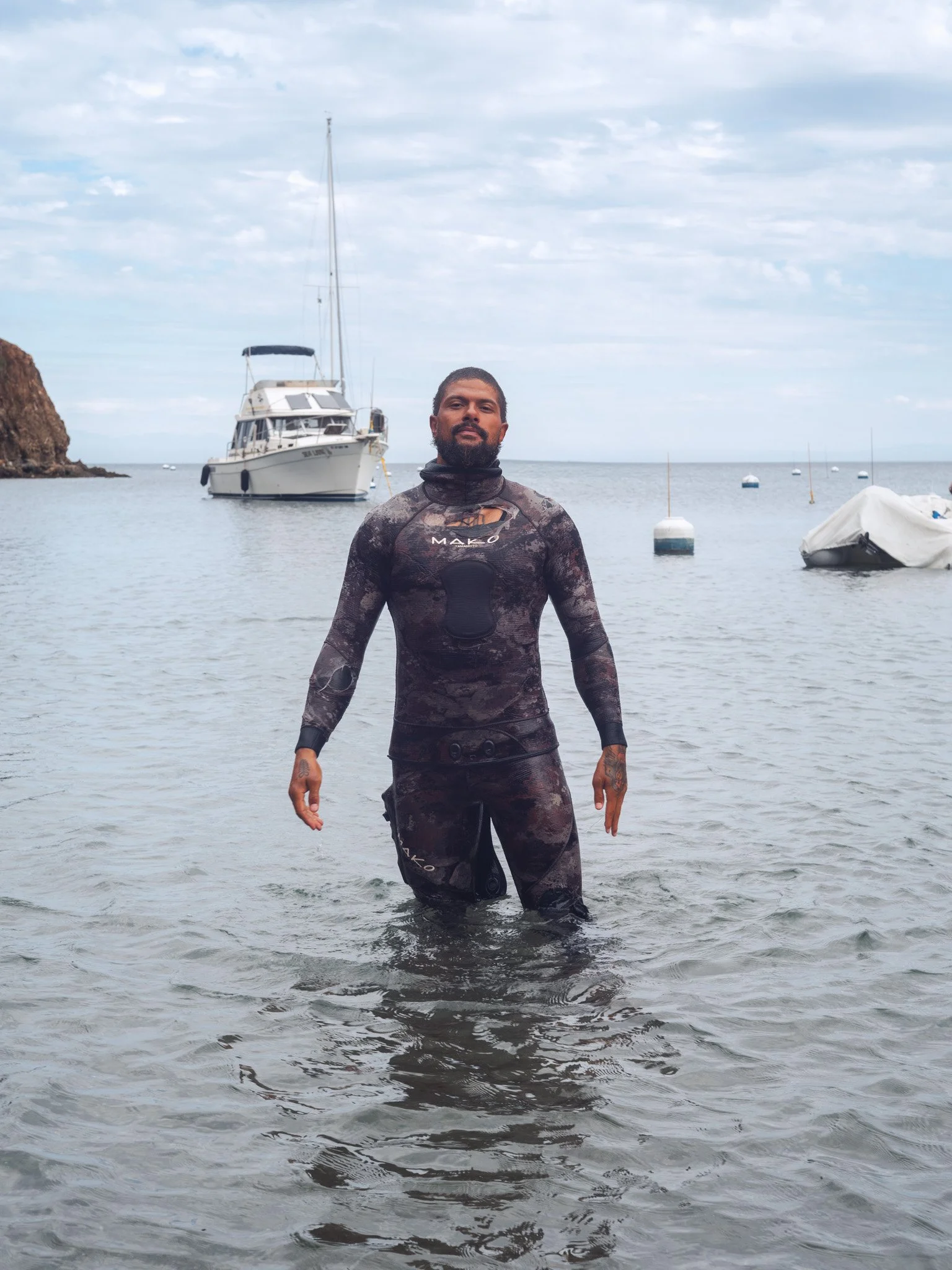
Kory Lamberts
Founder and Dive Educator
What inspired your connection to the ocean and led you to pursue a career in marine science?
My connection to the ocean and journey into marine science came through a very winding path. Ultimately, it was about radically saying no to the things that didn’t make me feel comfortable and fully pursuing the things that did. That process of listening to what felt true guided me toward the ocean and this field.
Tell me about the specific research or work you’re currently focused on and why it’s important?
My current work focuses on the California coastline, particularly in coastal conservation and restoration. I’m especially centered on Macrocystis pyrifera, or giant kelp; the keystone species of the California coastal ecosystem. Over recent years, this ecosystem has suffered severe degradation from factors like overfishing and climate change. Through restoration efforts and workforce development; specifically by training the next generation of marine scientists, we’re helping to restore ecological balance and build resilience along the California coast.
How does the location where we shot hold significance for you and/or your work?
Two Harbors, Catalina Island holds deep significance for me because it’s where I first taught scientific scuba diving. I lived on the island for two years while working with the USC Wrigley Marine Science Center, and that experience sparked the energy to start the Aquatic Futures Foundation. It also strengthened my connection to the ocean and to the realization that marine science, environmentalism, and the natural world aren’t just academic pursuits or talking points; it is essential to the survival and well-being of every person on the planet.
What are your thoughts on the potential cuts to NOAA funding, and how do you think it might impact your work and the broader field of marine science?
I see this as a season, and like all seasons, it will pass. Science endures. True science, I believe, has the power to liberate everyone. While funding cuts create temporary challenges, the pursuit of knowledge and truth through science continues regardless. That resilience is what sustains the field.
What does it mean for Black people to have access to and to be represented in this field?
Black people’s relationship to the ocean and to water itself is deeply significant. Since the Middle Passage, water has been used as both a tool of oppression and a symbol of transformation. The trauma tied to that history still echoes through generations. I believe reconnecting with water can be a pathway toward healing those generational wounds, reclaiming our narrative, and restoring a sense of belonging within the natural world.