Leslie Nguyen
Dive Educator and Animal Care Specialist
What inspired your connection to the ocean and led you to pursue a career in marine science?
Water has always been a medium that I have felt a natural gravitation towards since I was a kid. Growing up in California, I had the privilege of being surrounded by different aquatic environments - beaches, creeks, rivers, and lakes. My parents intentionally made it a point to introduce my sisters and me to these spaces throughout our childhood. I was always encouraged to experience and explore these different natural spaces, and this allowed me to develop a deep and personal sense of belonging in the water. Over time, this connection transformed into a sense of purpose to share this appreciation and protection with others, leading me towards a career in marine conservation.
What are your thoughts on Black people's relationship to the ocean and the importance of our perspective in marine science?
I realized in high school that I wanted to dedicate my life’s work to the water, but it wasn’t until college that I realized how isolating it was to pursue a career in this field as a woman of color. From being the only black person in my core classes to the lack of outward black representation in marine leadership, I was able to appreciate the underlying reality that marine conservation isn’t simply the preservation of our oceanic spaces and its inhabitants, but also the preservation and appreciation of diversity in culture, tradition, and people.
Marine conservation does not begin with a shared collective of people who love the ocean and want to protect it. It begins with your childhood environment, what you’re exposed to, the installation of appreciation in nature, and an understanding of the inseparable connection between people and nature - the understanding that there is no separation. I recognized that this perspective of people and nature being inseparable has somehow become a privilege to embody in today’s world, especially among Black Americans.
This idea of separation between people and nature was introduced to us through oppressive acts and crimes historically committed against black people. This is reflected in the lack of black and brown representation we’re seeing in marine sciences and in aquatic spaces and hobbies. Though our presence is not plentiful in these spaces, our presence that does currently exist is impactful, resilient, and resourceful – moving intentionally and rooted in community and culture. Black people’s ties with the ocean, with water, have seen much trauma, but that bridge has never been fully burnt. We have been presented with an opportunity to revisit and rewrite what this relationship looks and feels like, allowing us to go even deeper. This is why the perspective of black people matters in marine spaces.
Can you tell me about the specific research or work you’re currently focused on, and why it’s important? How did you come to it?
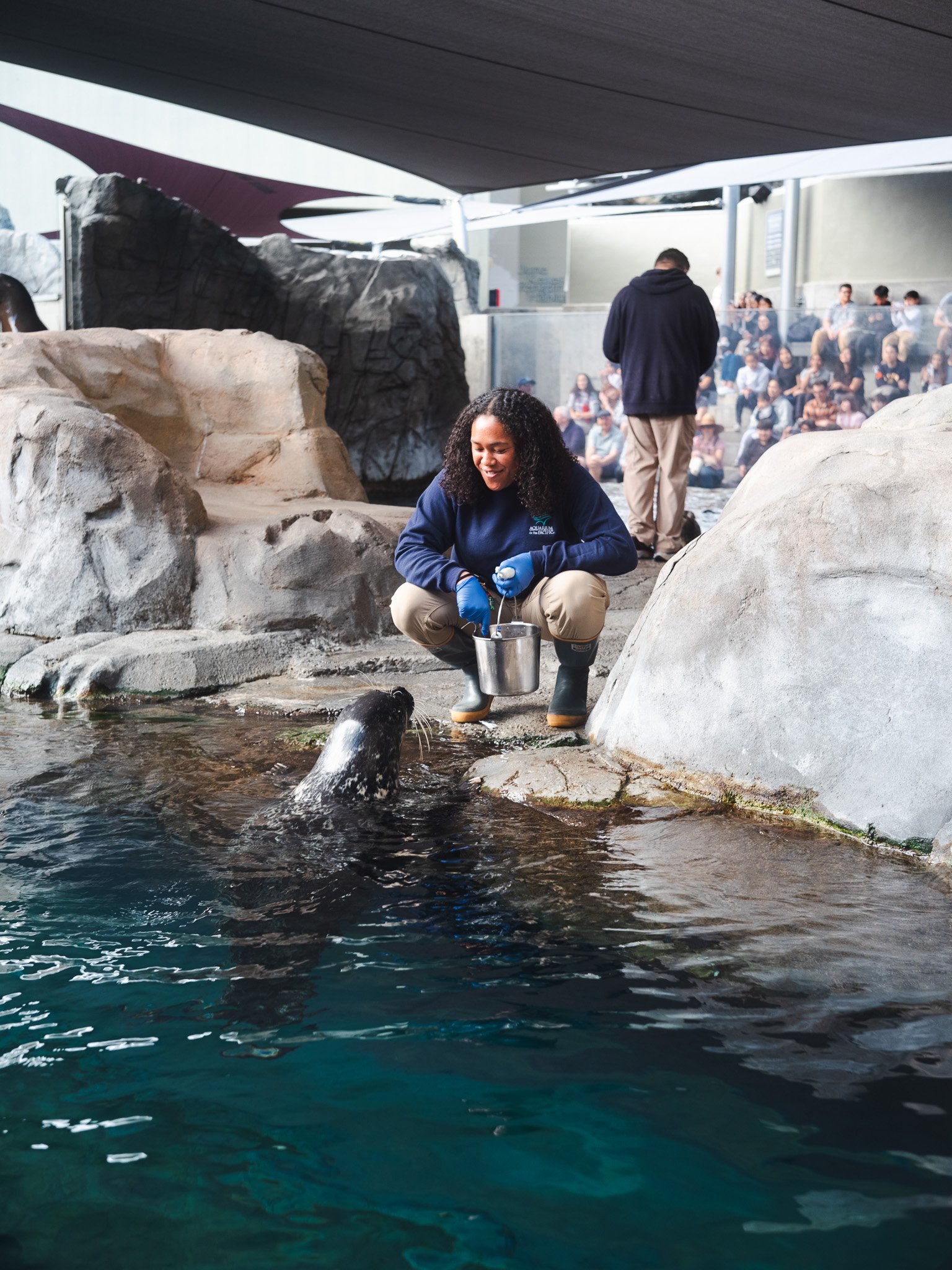
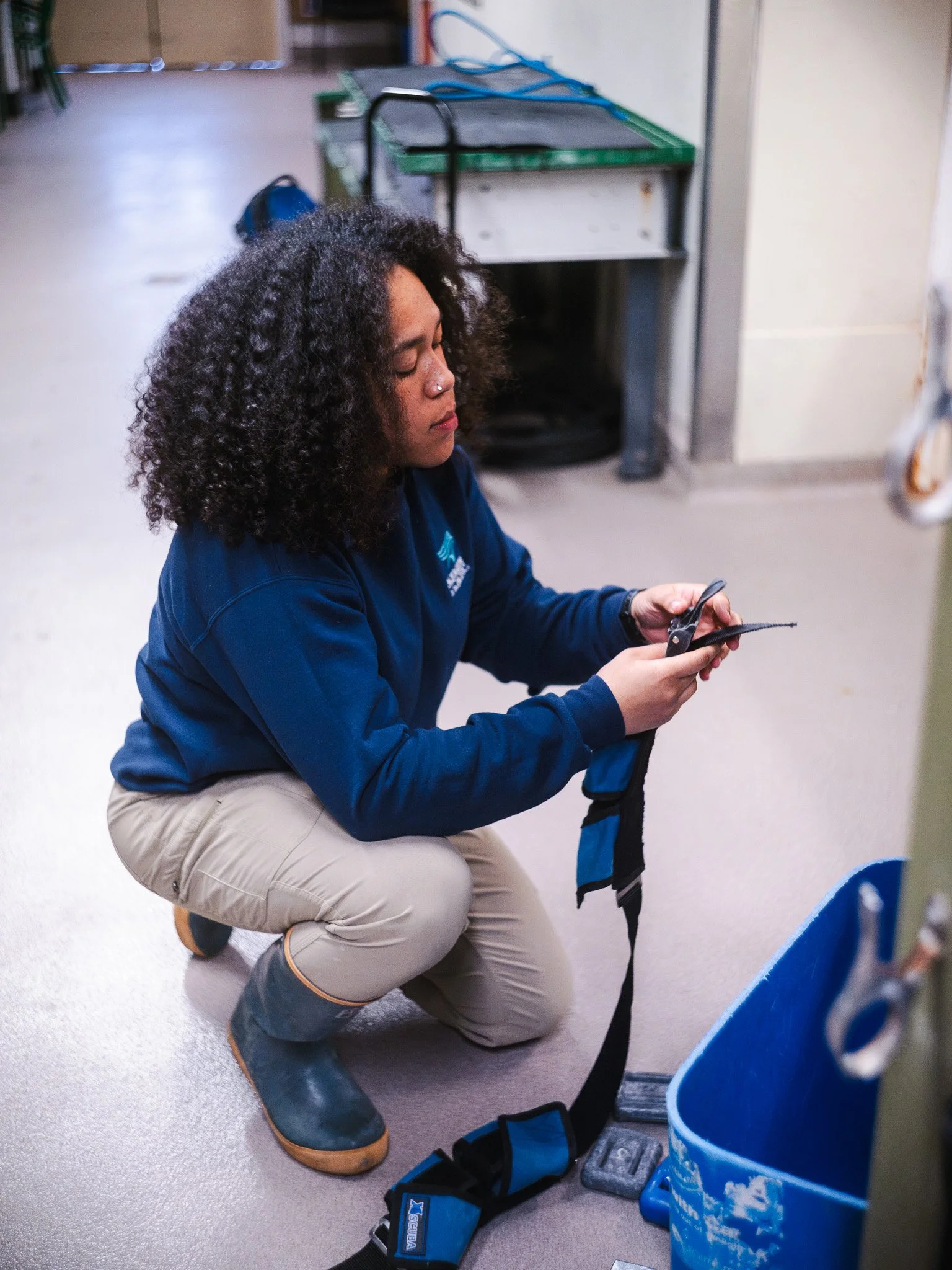
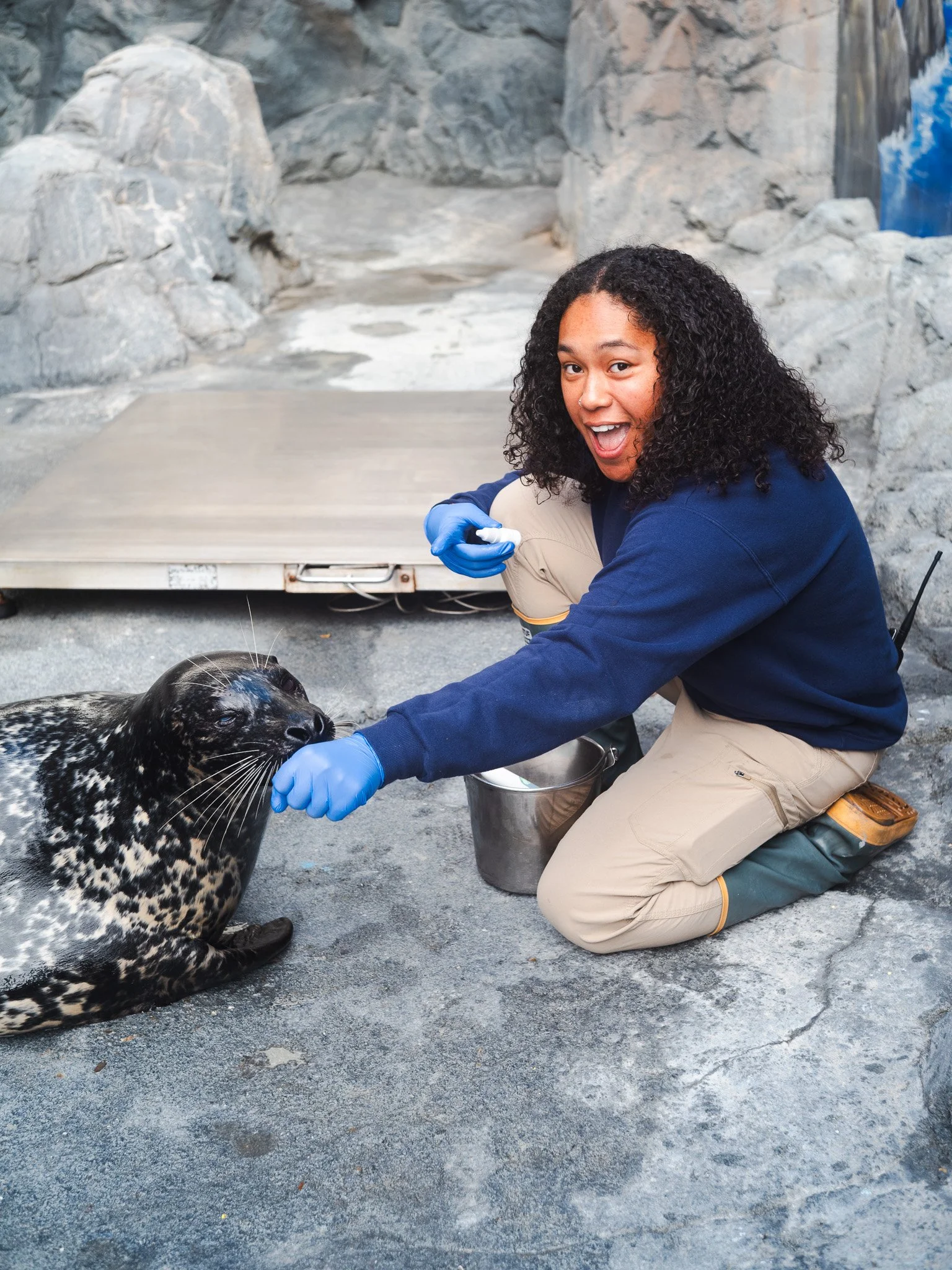
I currently work as an Animal Care Specialist at the Aquarium of the Pacific (AoP) where I work with and care for several marine mammals and amphibians within a few of our conservation programs. I have a role in our Sea Otter Surrogacy Program, which is a partnership program with the Monterey Bay Aquarium to help increase and stabilize the wild southern sea otter population along the central coast of California. I also have a role in our Mountain Yellow-Legged Frog program, which is a conservation partnership overseen by USGS and the California Department of Fish and Wildlife that partners with a few zoos and aquariums that collectively raise and release the critically endangered Mountain Yellow-Legged frog into their natural habitats.
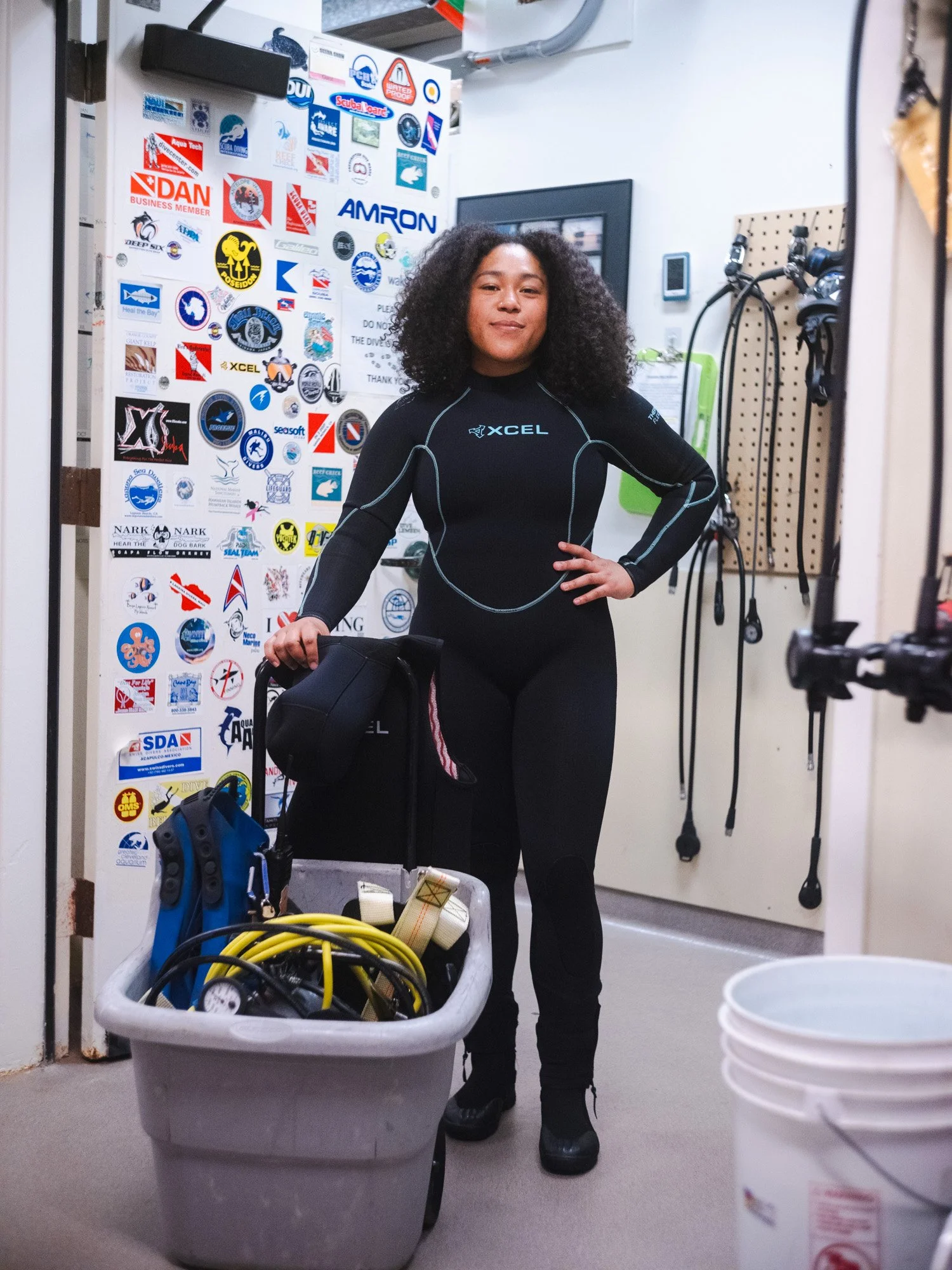
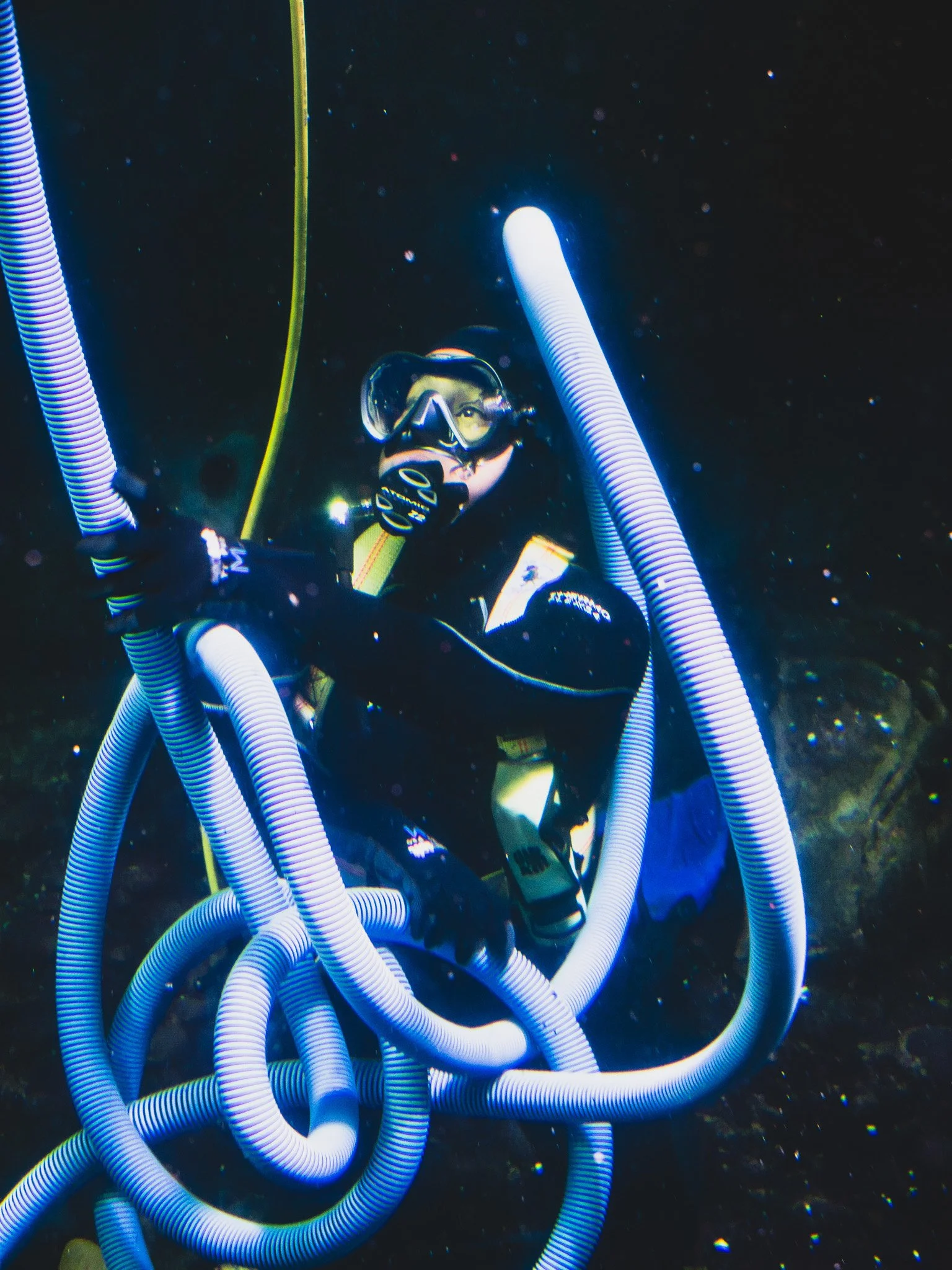
I also fill many roles adjacent to my work at AoP, as I am an active AAUS Scientific Diver, PADI Scuba Divemaster with Aquatic Futures Foundation, and an active community member and organizer. I find an abundance of joy and fulfillment in the work I do adjacent to my work at AoP, as all of these roles work together to build bridges in the gaps carved in marine conservation. Conservation doesn’t happen without conversation - relationships, networks, community. I used to solely focus on the marine animal and environmental aspects of ocean conservation. I worked with animals for a couple of years before understanding the true deficit of inclusive perspective and experience, black experience especially. Through my relationships at Aquarium of the Pacific, REEF, Aquatic Futures Foundation- my entire sea of networks- I continue to be reminded of the importance of placing people and community at the forefront of marine conservation. This allowed me to rewrite a career for myself centered around people, planet, and preservation.
How does the location where we shot hold significance for you and your work?
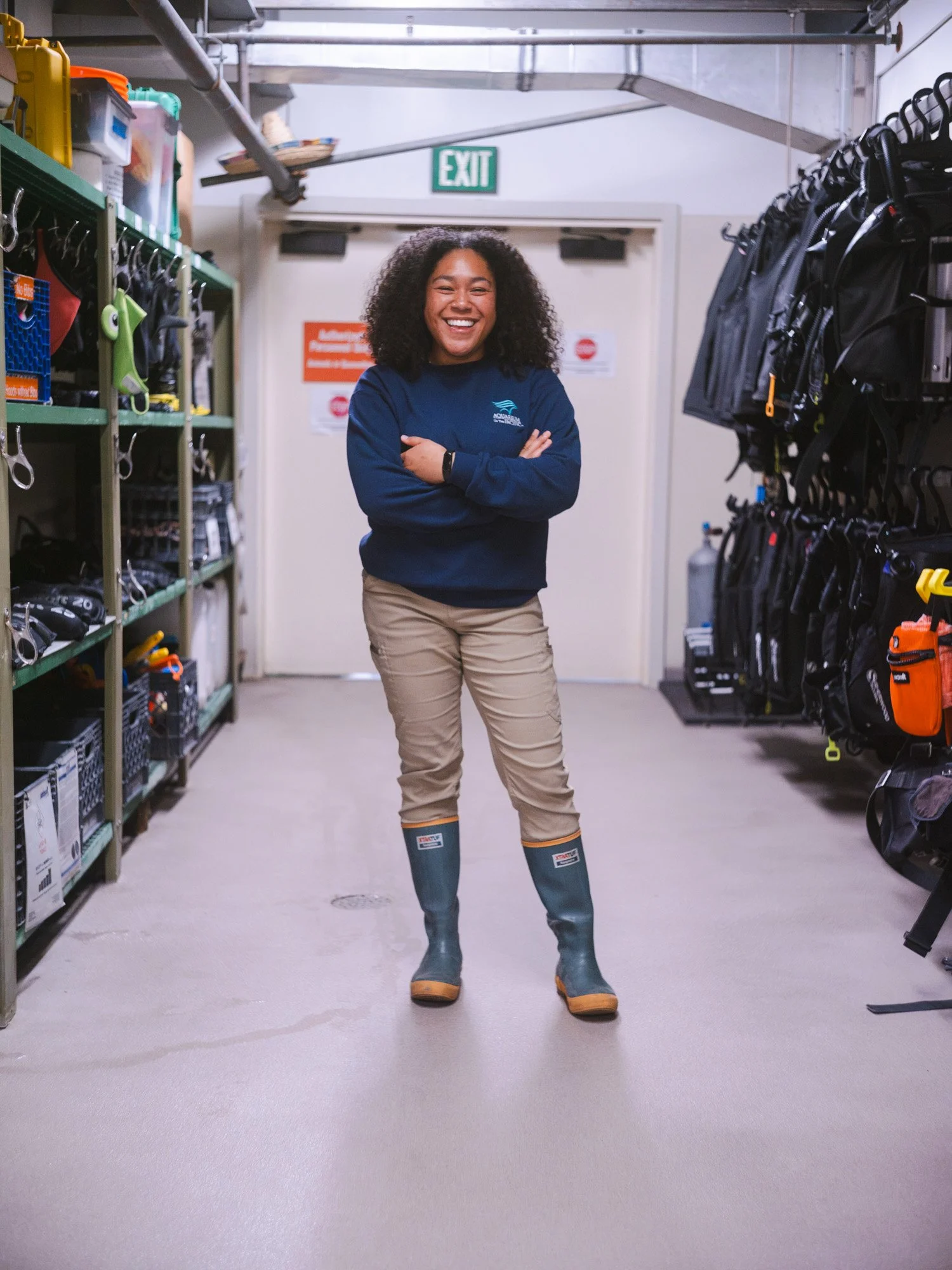
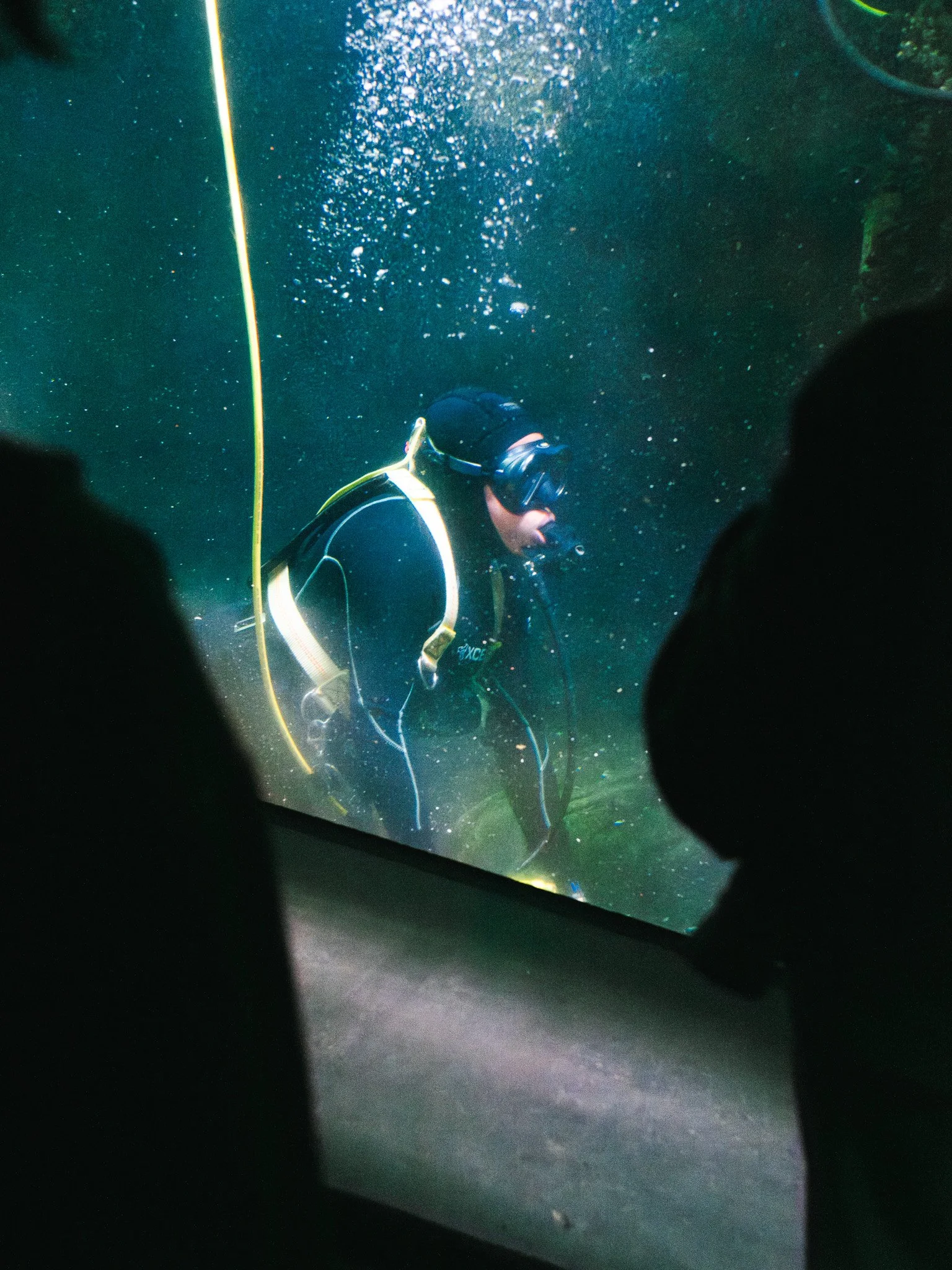
Aquarium of the Pacific (AoP) has been the central hub where most of my broadening career opportunities have occurred over the last 5 years. I became an AoP African American Scholar in 2021, and the inspiration, support, and relationships that have poured into me from this community have largely factored into the many roles I fill today. Not only have I been presented with fulfilling relationships that have then introduced me to different career opportunities, but the roles I have filled directly at AoP have been truly honorable. Having a direct role in animal care and marine conservation has taught me so much about the industry, the power of relationships and networking, and what it really takes to make conservation work. I’ve been surrounded by incredible leadership at the Aquarium of the Pacific, all of whom have walked their own career paths and passions and now pour what they’ve learned into me and my developing career. To be among and led by genuine, intentional, and empowering leadership is an irreplaceable and rare gift that is not to be taken for granted. Each opportunity, relationship, and conversation I’ve had at the Aquarium has supported my goals and created ripples in my career and personal growth, which I am now transferring into all of the work that I do for the people and planet.
What are your thoughts on the potential cuts to NOAA funding, and how do you think it might impact your research and the broader field of marine science?
Marine conservation is a promise to protect humanity’s interconnection with our oceans, with our planet as a whole. This is also a dedication to understand, preserve, and push cultural diversity in our scientific practices, but unfortunately, this is something that we are horribly failing to do. Budget cuts to NOAA funding and all other institutions that support marine science and understanding, especially at universities and private institutions, is an abrupt and aggressive attack on science and people. These budget cuts don’t just halt and affect ongoing research, but also puts a squeeze on who is involved in these research opportunities and spaces. Those who have the resources and can afford to stay involved will drive how science and research are done. Unfortunately, black and brown people will get the short end of that stick, continuing to push the preexisting exclusive culture of marine science.
I think the long-term effects of the current budget cuts we are experiencing highlight the work I am involved in in terms of why inclusivity is important and necessary for marine science spaces. As government budget cuts for marine science expand, the demand for private donations, sponsorships, and grants will grow. This drives us in a direction of having to lean more into communal funding opportunities and lean less on government funding.